Saturday, July 29, 2006

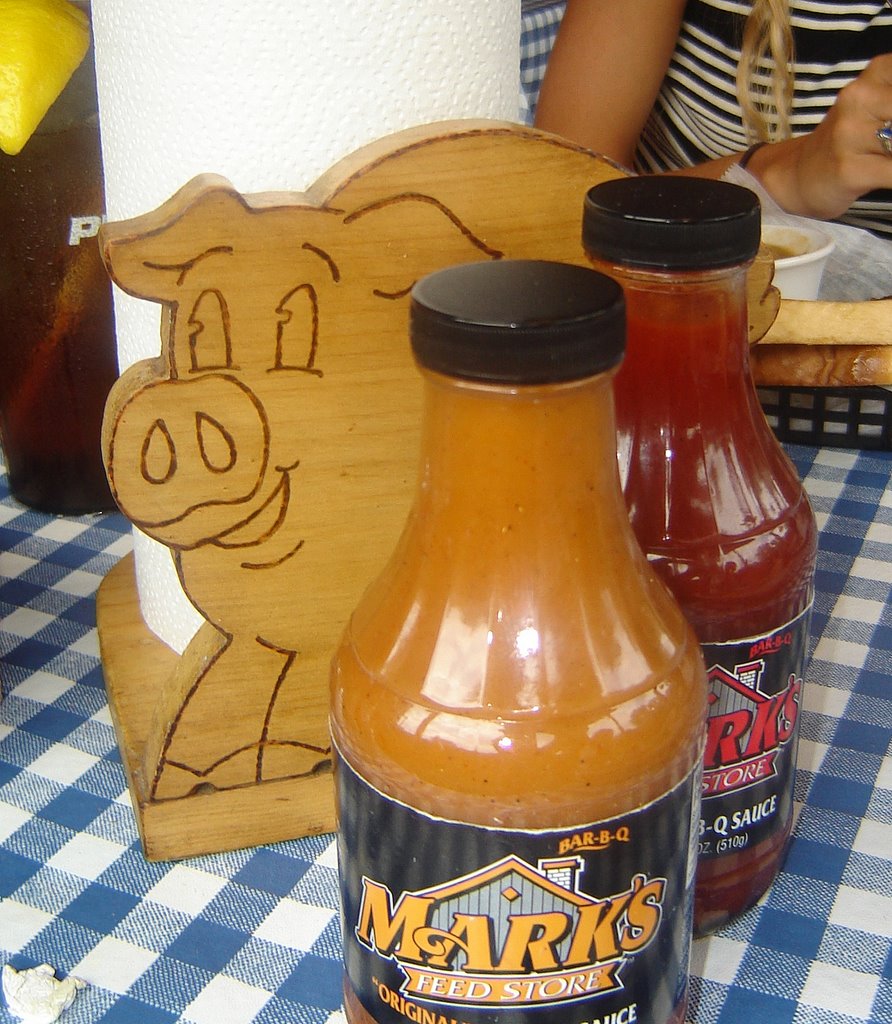
Mark's Feed Store, Louisville, KY


On her blog, Whining and Dining (see the link on the right), Leslie Kelley alerted us to the fact that cheaptickets.com had listed their top destinations for barbecue over the Fourth of July weekend--and Memphis was not among them!

One of the places listed was Mark's Feed Store in Louisville, KY, my home town. Today I am there, visiting my parents, so I convinced them they should join my sister, our niece and me there for lunch.

I hadn't been before, since my mom cooks so well that we don't usually eat out when I'm there. And when my sister is also in town, and we go out for dinner together, we are NOT looking for barbecue! There are too many great restaurants in Louisville to do that.

We got there just ahead of the crowd, which was a good thing, since by the time we left, there were no parking places in the lot, and the only empty tables were a few two-tops.
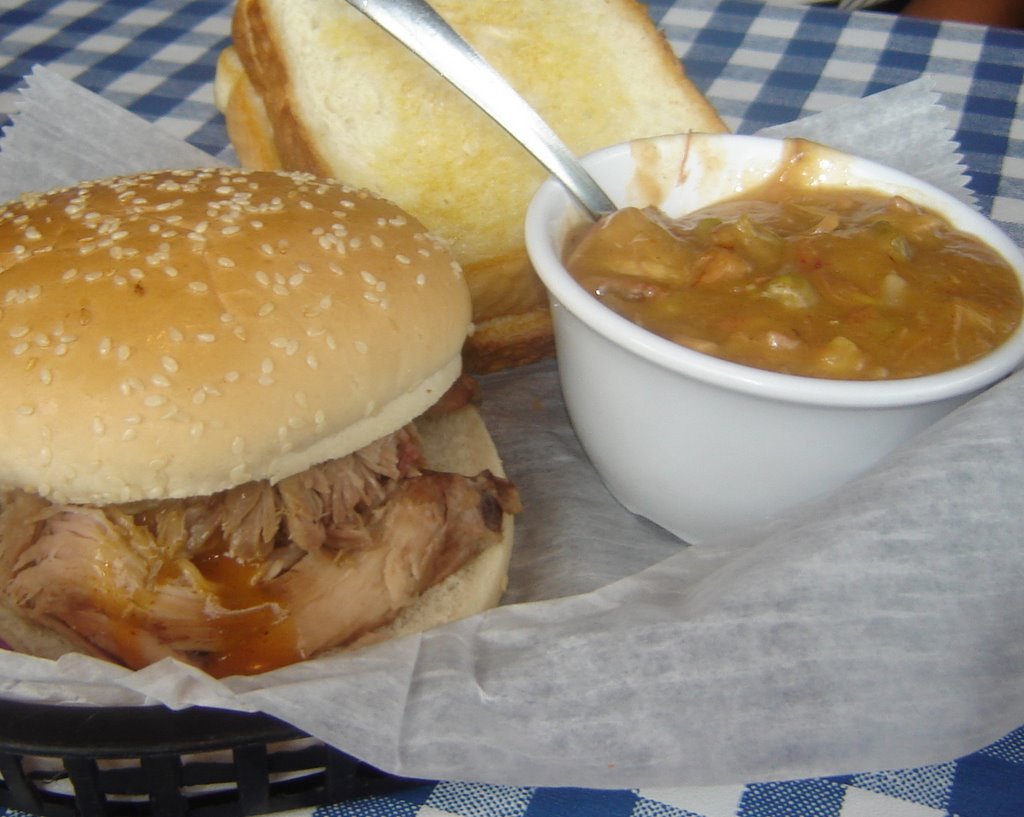
Pork Sandwich with Burgoo

It isn't far from my niece's home, so she had been there several times before. She didn't even look at the menu, and ordered the pork sandwich with burgoo. My mom always eats chicken and asked for no sauce on her chicken. My dad, as always ordered the ribs, my sister got the pork plate, substituting potato salad for the spicy fries, and I got the pork sandwich, substituting the deep-fried corn for the fries. The waitress was very obliging as we each made our own variations to the menu combos.

Pork Sandwich with Deep-Fried Corn

It came out promptly and the waitress did not have to ask "Who got the chicken?" but quite professionally delivered the right plates to the right people.

The chicken, served on the bone, came without sauce, as requested, but seemed to me to be a bit dry and overcooked. I didn't taste the ribs, but my dad said they were good, but without a deep-smoked flavor. The pulled pork was very tender and juicy, but again, lacked the definite smoky flavor that we get here in Memphis at the local joints. The interesting thing was the house sauce, which was a definite mustardy yellow. I had tasted it alone (bottles were on the table) and hadn't particularly liked it, but it also came on the sandwiches, and was much better on the pork.

Burgoo is a soup with its roots in Western Kentucky. Long cooked, with a variety of meats and vegetables, it should be dark and rich and only mildly spicy. This was sort of "gluey," as if it had been thickened with flour, and the dominant flavor was hot pepper. If you'd never had it at the source (Owensboro, KY, where I was born), you wouldn't go out of your way for it after tasting this version.

SO: How did it measure up to our Memphis BBQ? Not even close, if you like the good smoky flavor you get from most of our locally owned spots. The pork itself was tasty, as were the ribs. I loved the deep-fried corn on the cob. Two thumbs down for both the chicken and the burgoo. Thumbs up on the cheerful and efficient service. The mustardy house sauce is a matter of taste; everyone else liked it better than I did.

Will I go back there again? With all the great restaurants in Louisville? No way!

Friday, July 21, 2006

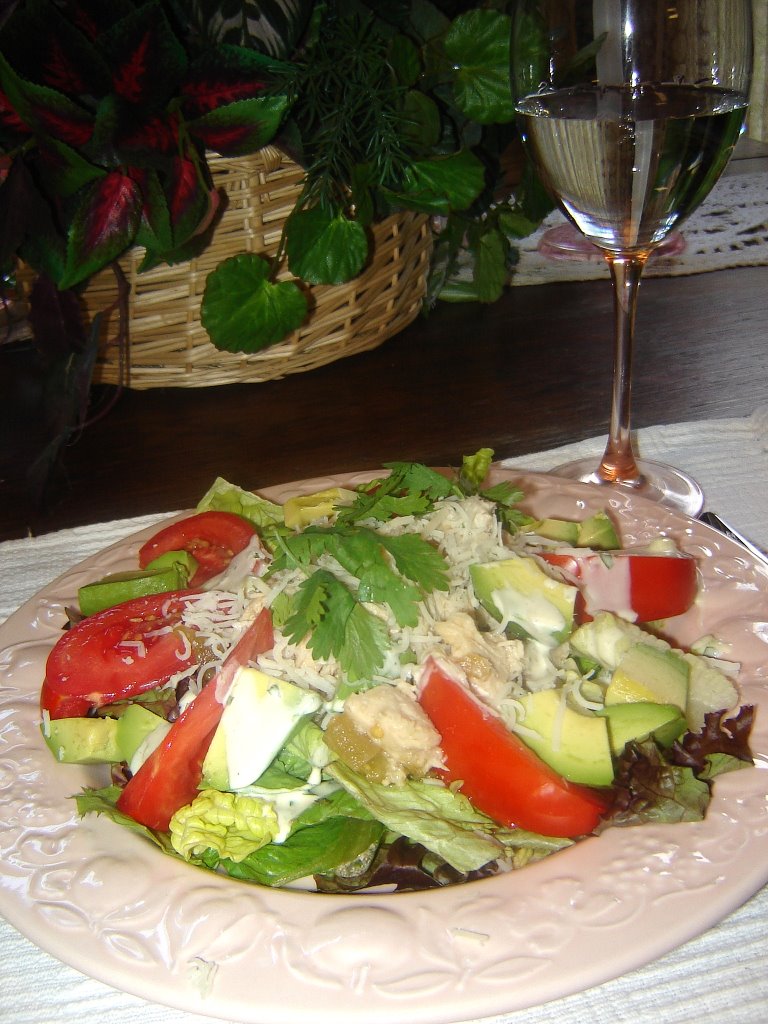
Easy but Good Tuna Salad

In the heat of summer, it’s hard to get excited about turning on the stove or the oven. A salad hits the spot, and with a little enhancement, a salad of canned tuna can become dinner. I like to use tuna packed in olive oil; I think it has a lot more flavor than the water packed type. You, however, must make your own decision about that.

If you are feeling a little more ambitious, you could replace the canned tuna with 12 ounces of fresh tuna, brushed with a little soy sauce and olive oil and grilled to medium-rare. Sliced thin and fanned out over the top, it makes a lovely plate. You could also toss the tuna, avocado and tomato with the greens and dressing, but I find the good stuff always goes to the bottom of the salad bowl when I do that.

I love the bags of pre-washed salad mixes from the produce section of the supermarket. You may use whatever blend you like best. Or you could wash and crisp your own lettuce…but I almost never do anymore. I like to serve this with packaged lime-flavored tortilla chips but crusty bread or even crisp crackers would be good as well.

I hope your friends and family enjoy this as much as mine did!

TUNA RANCHERO SALAD

2 7-ounce cans tuna
2 large vine-ripened tomatoes
2 avocados
1 bag (8 to 10 ounces) salad mix
4 ounces shredded cheddar or Monterey jack cheese
1 4-ounce can chopped green chiles, well drained
Cilantro sprigs, for garnish

Dressing:
1 cup bottled ranch dressing
2 tbsp minced cilantro leaves
2 green onions, with some of the green top, finely sliced
1 tsp Dijon mustard
The juice and finely grated zest of one lime
1 tsp sugar

Mix all the dressing ingredients and chill at least an hour, or, better, overnight, to mellow.

Drain the tuna and flake into large chunks. Core the tomatoes and cut into thin wedges. Peel the avocados and cut into 1/2” dice.

Put the salad greens on a large platter, or divide among four serving plates. Mound the tuna in the center and arrange the avocado and tomato around it. Drizzle with half the dressing. Scatter the cheese, chiles and cilantro sprigs over the top. Pass the additional dressing at the table. Serves 4 generously.

NOTE: If my guests are folks that I know will appreciate it, I might add half of a jalapeno pepper, seeded and deveined, and very finely minced, to the dressing. Or even a whole one.

Friday, July 07, 2006

Ice cream memories

Both my mother and father were from a rural part of Western Kentucky. They, as did some of their brothers and sisters, went off to the big city to make their fortunes, but some of my fondest memories are the times we would load up our car and head "down in the country" for the weekends. With wax-paper wrapped fried egg sandwiches for when we got hungry, we would make the three hour trip, singing all the songs we knew and asking "when are we going to get there?"

One thing we knew would happen at some point any summer weekend: one of the daddies would get in the car and go the few miles down the road to the ice-house, and pick up a couple of big blocks of ice (one grandmother still had a true "ice box"). While one of the aunts would whip up the ice cream mixture, the men would take an ice pick and chip those blocks into a big washtub. The ice cream would go into the tank of a big crank-type freezer. Ice and rock salt would get packed around it. Then we would all take turns cranking, the youngest of us first, while it was still easy to turn. As it started to freeze, it took a bit more muscle, until the last few minutes had to be done by one of the daddies.

A towel would be draped across it while we consumed vast quantities of fried chicken, home-cured ham, homegrown veggies and salads.

Finally we would dip into the ice cream, and I’ll tell you, to this day I can’t think of anything better! Usually it would be vanilla, with berries, fruit, or homemade syrups to pour on top. If there were lots of us, there might be two freezers, and the second would be for the more adventurous: banana, peach, or pineapple.

I still have a freezer of the same size, although mine is electrically cranked. It makes a couple of gallons of ice cream, quite a lot for a dinner party at the house. And it’s still a lot of trouble. But if you love homemade ice cream, and haven’t discovered those you can find now with a cartridge that lives in your freezer until you need it, you have a treat in store! Available at most cookware and discount stores, it makes a quart, perfect for six to eight guests. I even ordered an extra cartridge, so I can offer two different flavors, if I want, since the freezing process takes only about a half-hour.

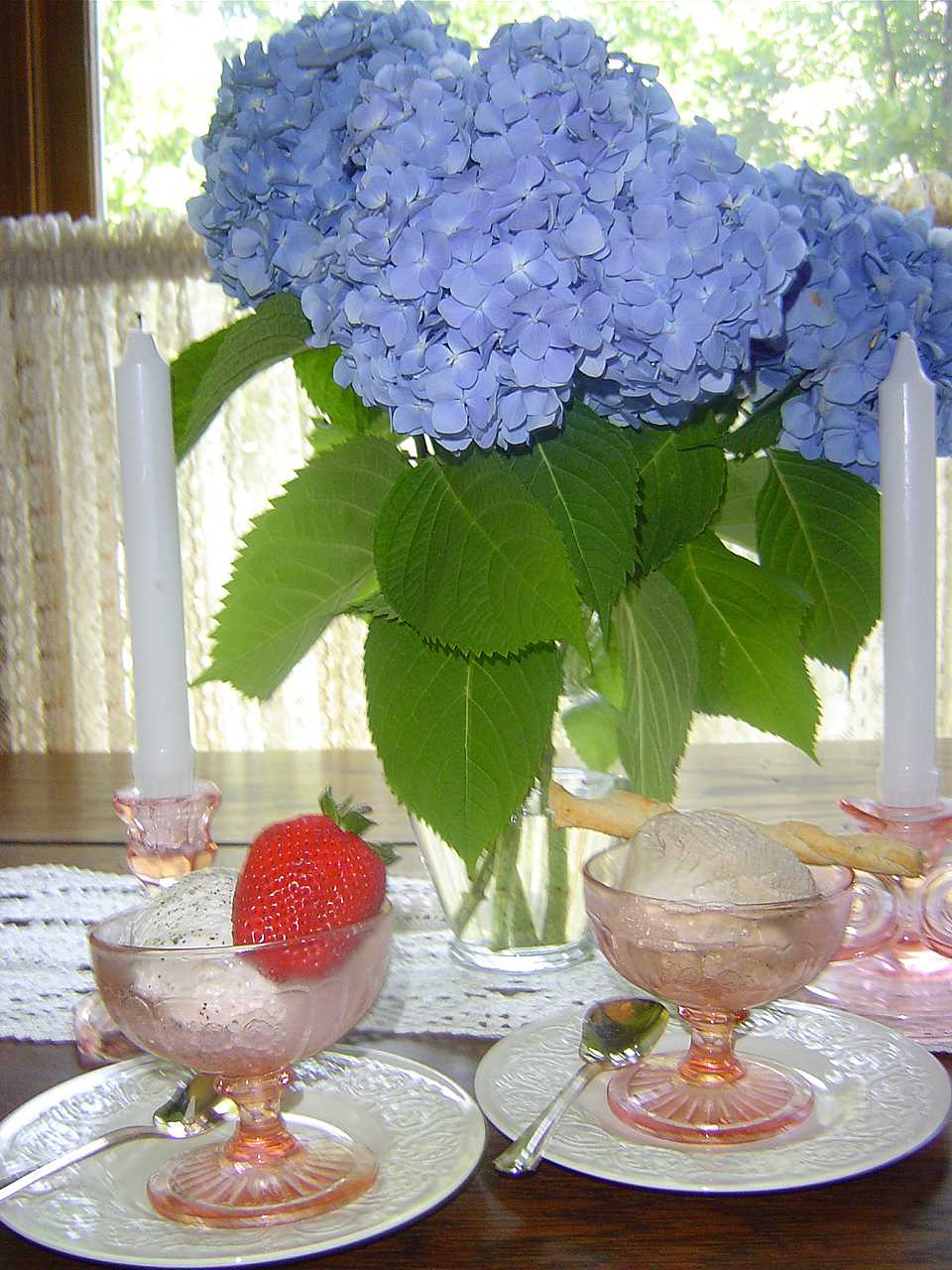
So pick up some fried chicken, make your favorite potato salad, and then treat your family and friends to homemade ice cream…and not just your normal vanilla! The black pepper ice cream will surprise you. A favorite dessert in Italy is strawberries with freshly ground black pepper and a drizzle of balsamic vinegar. Here’s the ice cream ready for just the berries. And the brown sugar-ginger flavor will be good with any fresh fruit, or on its own with just a crisp cookie. Both need to be made in plenty of time to chill well before freezing, so take that into consideration. Both are just the right size for the cartridge type freezer. Your friends will feel so pampered—we won’t tell them how easy it was!

BLACK PEPPER ICE CREAM
2 cups heavy cream
8 whole allspice berries, coarsely crushed
1/2 cup sugar
1 tsp vanilla
4 egg yolks
1 tbsp black peppercorns, crushed
2 tbsp good quality balsamic vinegar
In a heavy saucepan, combine cream, allspice berries and 1/4 cup sugar and bring just to a simmer. In a large bowl, whisk together the eggs and remaining 1/4 cup sugar until the mixture is thick and pale, about 5 minutes. Pour in the cream mixture, whisking constantly. Pour the mixture back into the pan and cook over medium-low heat, stirring constantly, until it lightly coats the back of a spoon. DO NOT LET BOIL! Remove from the heat and let stand for about 20 minutes, then strain though a fine sieve into another bowl. Chill thoroughly. Stir in the black peppercorns and the balsamic vinegar and freeze in an ice cream maker according to the manufacturer’s instructions.

BROWN SUGAR-GINGER ICE CREAM
4 egg yolks
1/2 cup dark brown sugar, packed
1/4 cup granulated sugar
1 1/2 tsp pure vanilla extract
2 cups half-and-half, warmed
1 tbsp ground ginger
Combine egg yolks, sugars and vanilla in a large bowl. Whisk or beat until fluffy and light. Add the warm cream, whisking constantly. Whisk in the ground ginger. Transfer to a heavy pan and cook over medium-low heat, whisking constantly, until slightly thickened, and coats the back of a spoon. DO NOT LET BOIL! Pour into a bowl and chill thoroughly. Freeze in an ice cream maker and freeze according to the manufacturer’s directions.

Saturday, February 25, 2006

Super Southwest Shortribs

Posted by Picasa As I promised, I am attempting to address some of the e-mails sent to me with suggestions and requests for recipes.

One Loyal Reader asked about beef short ribs. They are quite the thing now, and you can get them in the very finest restaurants at a price that might belie their reasonable cost. What makes them more costly in a restaurant situation is the loving care that they need. The Loyal Reader had been to a small place in the southwest and gave me only a few hints about the dish he had enjoyed so much.

One of the things he said was that it had "mild heat" and a "sort of smoky flavor." That said "chipotle pepper" to me--that’s a jalapeño pepper, dried, then smoked. It is available either in bags, dried, or in cans with adobo, a sort of spicy tomato sauce. It gives food a nice zing, but is not tongue-burning, head-sweating hot.

And now to a confession: I had never cooked short ribs. So I took myself off to Charlie’s Meat Market and chatted with my butcher friend Chuck. He suggested that I use ribs cut across the bone, in 1" to 1-1/2" width. I took them home and proceeded to put together a spice mixture that I thought might go with the chipotle flavor. I rubbed it all over the ribs and put them in the fridge. At the grocery store, what did I find but Chipotle Tobasco Sauce. Well, I needed to try that, didn’t I?

I wasn’t happy with the first try. To begin with, I thought I wanted longer bones in the ribs, so they didn’t fall apart in the cooking process. And then, I thought the spice mixture was not as lively as I might have liked.

So back to Chuck I went, and had the ribs cut crosswise into wider 2" strips. I added layers of flavor to the spice rub, and picked up the taste a lot with lime juice and zest.

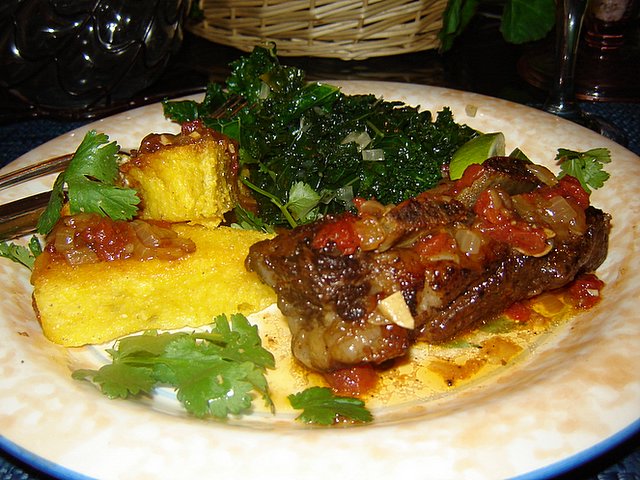
To go with the ribs and their savory juices, I cooked up some Delta Grind stoneground grits, adding shredded cheddar cheese and a small can of chopped green chiles. Then I poured them into a loaf pan and let them chill. Sliced, brushed with some of the fat from the ribs and run under a hot broiler, they made an excellent complement. For a green veggie, I sautéed a handful of minced onion in a film of the fat from the ribs, added a bit of chicken stock and steamed kale in it. I love kale.

I don’t know if this is exactly what my Loyal Reader had in mind, but I sure did like it! The one thing I would counsel: if you have time, rub down the ribs a day ahead of cooking, and cook a day ahead of eating. The ribs must be slow-braised for the best flavor and texture, but they give off a lot of fat. If you can chill them overnight after fully cooking them, you can scrape off almost all the fat.

Otherwise, before serving, pour off the cooking juices into a measuring cup and skim off as much fat as you can with a ladle. You can do what you want with the fat, but I can tell you that it makes a mean fried egg for breakfast the next morning as you are cleaning up the last of the dishes!

Any leftover beef can be taken off the ribs, mixed with the cooking juices and used as a pasta or rice sauce. I had some left, but not enough for another meal. I put them in the freezer and used them later to stuff wonton wrappers, ravioli style. Cooked and tossed with olive oil and grated Pecarino Romano cheese, they were quite tasty.

Because I thought they were so good, I made another batch for a different batch of friends. I had about one generous serving left over. I simmered it in more stock, added another can of tomatoes and made a good soup. I served it with a yellow rice pilaf timbale in the center of the bowl. Also YUMMY!

SOUTHWEST BEEF SHORT RIBS
The rub:
1 tsp kosher salt
1 tsp black pepper, preferably freshly ground
1 tsp ground cumin
1 tsp ground coriander seed
1 tsp ground cardamom
? tsp ground ginger
The beef:
6 lbs beef short ribs
1 large onion, peeled and chopped
6 large cloves garlic, minced
2 cups chicken stock
1 can diced tomatoes, undrained
Juice and zest of two large limes
2 tbsp (or more to taste) Chipotle Tobasco Sauce
1 lime, cut into thin wedges, for garnish
1 bunch cilantro, leaves only, coarsely chopped, for garnish

Mix the rub ingredients in a small bowl. Sprinkle generously on all sides of the short ribs and massage it in gently. Set aside at room temperature for a couple of hours, or refrigerate overnight.

Preheat the oven to 350F. Cut the rib strips into two long pieces. Heat the oil in a large heavy skillet over medium-high heat. Add the ribs in batches, without crowding, and brown well on all sides. As they brown, transfer them, meaty side down, to a baking dish with a lid that will hold all the ribs in one layer.

Reduce the heat to medium-low. Add the garlic and stir a couple of times. Add the onion, cover and cook until the onion is soft and golden, stirring occasionally. Add the broth and bring to a boil, stirring with a wooden spoon to scrape up any browned bits. Add the tomatoes with their juice, the lime juice and zest and the Chipotle Tobasco Sauce. Bring to a boil and pour over the ribs. Cover and bake until the ribs are tender, about two hours.

Remove the lid of the baking dish and with tongs, turn the meaty side up. Continue to bake until the ribs are fork-tender, another half-hour or so. Remove the ribs to a serving platter and drizzle with some of the cooking juices. Arrange the lime wedges around the edge of the platter and sprinkle generously with chopped cilantro. Pass the remaining gravy at the table. Serves 6 to 8.

Wednesday, February 08, 2006

A Football Feast


Posted by Picasa June was in the shower when the tree cut the house in half, and George was just getting ready to leave for work. The result of “Hurricane Elvis” that struck in the summer of 2003 turned out, for the Owens’, to be almost a blessing.
The kitchen, pre-storm, had been a galley type kitchen, with barely room for two people to pass, much less cook together. Now when you walk into their renovated home, there is no doubt what goes on in that area: cooking, eating, and plenty of it!

George, having taken the early-retirement offer from Fedex, had the time to do a lot of the finish work himself, allowing for wonderful results with the money they received from their insurance. They pushed the back wall out to include the former patio, and knocked out the wall between the kitchen and former dining room. The result is something they call a “keeping room.” The first thing that strikes your eye is the 16-foot long granite topped island, with five-burner cook-top, dishwasher, big double sink and trash compactor. Plenty of drawers and cabinets underneath hold almost everything needed to cook close at hand.

Another counter, which held the cooktop in its former life, now boasts a marble top for June to use when making the breads and pastries for which her friends are very appreciative.

At the far end is a large homey, inviting seating area, with a big-screen TV, and overstuffed chairs and a sofa that seem to just envelope you when you sit. You might never want to get up.
But you will, because on the far side of the island from the cooking area are a row of comfy stools that encourage you to watch as June works her magic on the evening’s dinner.

This weekend George and June Owens invited a group of friends to watch the Super Bowl. As we were gathering, June served a variation on the chip-dip theme: toasted pita wedges with store-bought hummus. The platter was strewn with an assortment of olives, peperoncini and cherry tomatoes.

When it came time for dinner, June brought out a rustic casserole of pasta, sausage, potatoes, cabbage and cheese. I loved it! Her recipe was written in general terms on a tattered recipe card, but I convinced her to give me measurements so you can make it, too. She got the recipe from an Italian friend who lives in Rome, but the combination of ingredients bring to mind the cooking of northeast Italy.

A green salad with dried cherries, goat cheese crumbles and a vinaigrette made of 1/4 cup tequila-lime vinegar (available at gourmet markets), a couple of tablespoons of Dijon mustard, and 3/4 cup olive oil made a wonderful accompaniment. A loaf of her excellent bread went well, too.

Dessert was a purchased rum-cake topped with dollops of clotted cream. Whipped cream would be an excellent alternate. Invite a few friends and try it all. You’ll all be so happy you might not even care if your team loses!

June’s Baked Pasta Casserole

1 lb smoked sausage, sliced 1/4” thick
2 lb red skin potatoes, peeled, in 3/4” cubes, rinsed and drained
2 tbsp olive oil
2 tbsp fresh rosemary leaves
1 small cabbage, shredded
1 lb penne pasta, preferably imported
8 oz butter
3 cloves garlic
20 fresh sage leaves, chopped
12 oz gruy?re, cubed
1/4 cup Parmesan cheese, grated

Preheat oven to 350. Sauté sausage in heavy skillet over medium heat until lightly browned and set aside. Toss the potatoes with 2 tablespoons olive oil and the rosemary on a baking sheet and roast for 20 minutes. Sprinkle lightly with salt.

Cook the cabbage for 10 minutes in boiling salted water. Drain well.

Melt the butter in a skillet over medium-low heat, add the garlic and sage and cook 2-3 minutes, stirring a couple of times. Pour over the hot, cooked and drained pasta and toss well.

Now, in a large buttered casserole, layer the ingredients in this order: pasta, potatoes, cabbage, cheeses and sausages. Make at least two layers of each, three if you casserole is deep enough. Salt and pepper each layer to taste. Cover with foil and bake for 20-25 minutes, until heated through. Remove foil and bake another 5 minutes or so, until cheese is melted and lightly browned. Serves 8-10.

NOTE: This looks like a lot of work, but it’s not, and can be done ahead and refrigerated. Remove from the refrigerator about an hour before baking.

Thursday, January 05, 2006

Yummy Chestnut-Scallop Soup

Along about this time every year I get this question: "What can I do with chestnuts besides stuffing?" Chestnuts are widely available this time of year, precooked, in jars or in vacuum packs. They are a versatile food, nutritionally similar to brown rice. In Europe they are used in a variety of breads, vegetable dishes or in rich seasonal desserts. I love them in soups.

Recently I had a pound of dry scallops that needed to be cooked. Scallops as we usually find them in the US are the muscles that hold the shell halves together. Harvested from the Eastern US coast up through the Canadian coast, they come two ways: "wet" or processed, and "dry."

Processed scallops are soaked in a phosphate solution, which has two results: first, it prolongs the shelf life of the scallops; and secondly it causes the scallops to absorb the liquid, plumping them up. When heated, the scallops give up this liquid, making it almost impossible to get them browned before they are disagreeably tough. If you buy frozen scallops, check the bag carefully. You could be paying for water content of up to 30-35%.

Dry scallops, on the other hand, have a shorter shelf life, but, patted dry before cooking, will turn a lovely golden brown well before they are overcooked. Dry scallops must have a moisture content of 20% or less. They are more expensive than wet scallops, but you’re not paying for a lot of water. You can order them from specialty markets, or ask your supermarket seafood counter to order them for you.

So, as I was saying before I started that little lecture, I had a pound of large scallops (U-10, meaning 10 or fewer per pound) that needed to be used. I have made chestnut soups before, but was inspired to try it with the scallops, and was I glad I did! It was very quickly done, and everyone declared it fabulous. I had a loaf of crusty bread and a green salad, and that was all we needed for a great meal for a chilly evening.

You can make the basic soup earlier in the day, or even the day before, and chill. Then at serving time, reheat the soup and the bacon garnish, sear the scallops and bring out the bread and salad. Wouldn’t this be a wonderful way to end a cold winter day?

Creamy Chestnut Soup with Scallops

3 slices good smoked bacon (I used applewood-smoked)
Olive oil, if needed
3 large shallots, peeled and minced
4 cups chicken or vegetable stock
7 to 8 oz cooked chestnuts
1 cup heavy cream
3 tbsp unsalted butter
1 lb sea scallops (see note)
2 tbsp all purpose flour
1 tbsp fresh thyme leaves, plus sprigs for garnish (see note)

Cut the bacon crosswise into 1/4" strips. In a heavy saucepan, cook over medium heat until lightly browned, but not crisp. Remove with a wooden spoon and reserve. Add the shallots. Good bacon doesn’t usually leave a lot of fat in the pan. You may want to add a splash of olive oil. Cook the shallots, stirring occasionally, about 5 minutes. Add the stock, bring to a boil, reduce heat and simmer uncovered for 5 minutes.

Chop half the chestnuts coarsely and add to the soup. Continue to simmer another 5-10 minutes. Puree with a hand blender, or in a food processor. Add the cream and the remaining chestnuts, cut into quarters. Bring to a simmer and keep warm.

In a large heavy skillet over medium high heat, melt the butter. When it is foaming, add the scallops (which have been patted dry) without crowding. Cook until well browned on each side, turning once, 5 to 6 minutes total. They should just barely be done in the center. Remove and keep warm. Reduce the heat to medium and add the flour to the skillet. Stir and cook a couple of minutes, being careful not to brown the flour, scraping up any browned bits with a wooden spoon.

Whisk the flour mixture into the soup, add the thyme leaves, bring to a simmer and cook until thickened, whisking constantly.

Divide the scallops among six flat soup bowls. Ladle the hot soup over the scallops and sprinkle with the bacon strips. Garnish with a sprig of thyme. Serves six as a full meal, or eight as a first course.

NOTE: If you prefer, a pound of boneless chicken breasts, cut into 1" chunks, can be substituted for the scallops.
NOTE: If fresh thyme isn’t available, use 1 teaspoon dried thyme leaves, and garnish the finished soup with minced parsley. I think this would also be excellent with tarragon, too, although I haven’t tried it. I will, though!

Tuesday, January 03, 2006

Pomegranate Pasta-For Wine Blog Wednesday

We are near the end of the very short season for fresh pomegranates. Cultivated since pre-historic times, they seem to be native to the Middle East. They appear in Greek mythology, in the Old Testament, and in ancient Chinese art and literature. And they’ve been cultivated in California for over 200 years.

They have a short season--available from November through January—so now is the time to pick up a few. They are touted as having a high concentration of antioxidants, and to possess heart-healthy properties. The seeds provide a high fiber content, and a considerable amount of potassium and vitamin C. In their native habitat, they’ve been used for centuries in folk medicine, to treat all sort of ailments, including sore throats and rheumatism. But that’s not why we like them…they also taste good!

Don’t be intimidated by their appearance. A pomegranate isn’t exactly a beauty contest winner. About the size of an orange, it has a tough dull reddish skin. But within lies the treasure: hundreds of little seeds surrounded by a delicious sweet-tart ruby red pulp. This is the part used to flavor and color grenadine, or to simmer down into pomegranate syrup (also known as pomegranate molasses).

To extract the seeds, you can simply cut off about ?" of the cap, score down the sides and pull sections apart, loosening the seeds from the bitter membranes with your fingers. A word of advice: Do not do this wearing your favorite white cashmere sweater!


I like to eat the little seeds right from the fruit, or scatter them over a garden salad for a burst of color and flavor. They make a wonderful addition to a winter citrus fruit salad. Sprinkle them over grilled or broiled fish instead of lemon juice. Or you can add them to guacamole or hummus for extra tang and zip.

Right before the last Wine Blog Wednesday, I had bought a couple and was trying to think of something new to do with them. I was making pasta for dinner…and here’s what came of it. It was quickly done, and I thought it was really yummy. A crisp green salad and crusty bread makes it a perfect weekend meal. But don’t wait too long to try it--in another few weeks the season will be over!

FETTUCCINE WITH CHICKEN AND POMEGRANATE
1 lb boneless chicken breast
1/4 cup all purpose flour
1 tsp salt
1/4 tsp pepper
4 tbsp butter
4 shallots, peeled and minced
1 tbsp fresh mint, shredded (see note)
1 tbsp fresh thyme leaves
1 cup dry white wine
1/2 cup heavy cream
Seeds of one pomegranate
12 oz fettuccine
Fresh thyme sprigs for garnish

Cut the chicken breast into 1" chunks. In a flat bowl, combine the flour, salt and pepper. Dredge the chicken chunks in the flour, shaking off the excess. In a large heavy skillet over medium heat, melt the butter. When hot, add the chicken pieces, a few at a time to avoid crowding. Cook until golden on each side. Remove to a bowl and set aside. Add the shallots to the pan and cook, stirring, until tender and translucent, without browning.

Add the wine to the pan and bring to a simmer, scraping up any browned bits with a wooden spoon. Return the chicken to the pan, cover, and simmer 10 minutes. Stir in the cream and ? of the pomegranate seeds. Cook uncovered for another five minutes.

Meanwhile, bring plenty of well-salted water to a boil and cook the fettuccine until just barely al dente. Drain and add to the pan with the hot sauce. Toss well and serve immediately, sprinkled with the remaining pomegranate seeds and topped with a sprig of fresh thyme.

NOTES: If you can’t find fresh mint, leave it out and use 1-1/2 tablespoons of fresh thyme leaves. If you don’t have shallots, you can use about 1/4 cup minced onion with one clove minced garlic instead. I didn’t think it needed grated cheese, but if you think pasta is naked without it, I would suggest pecarino romano as a good choice.

Hello again!

I'm back...the holidays are over! I like to say that my holiday begins when the store closes on New Year's Eve, but then yesterday we had inventory to do. So maybe my holiday starts today.

Anyway, I've done some cooking this past month, and will share it with you over the next few days.

I hope everyone had a wonderful holiday season and wish you all a very happy new year!

Wednesday, December 07, 2005

Wine Blog Wednesday #16

With the challenge by Derrick to choose a wine this month that's just another pretty face, I wandered around the wine shop, discarding first one, then another, until I saw this wine. Isn't that a cute label? I love a winemaker with a sense of humor (the clever wine names from Bonny Doon come to mind). I was hoping for something a little more....shall we say esoteric...than a chardonnay but I just had to have it! And at $6.00 a bottle how much was I risking?

I was making pasta, and picked up a pomegranate at the grocery store. The sauce turned out to be a sort of herbed alfredo with sautéed chicken and pomegranate seeds. (I'll post the recipe when I make it again and get proportions. It was definitely worth making again.)

Some web searching reveals that the winery, Rex Goliath , located in Monterey County, California, makes several varietals under this label, supposedly named after a huge rooster that traveled with a Texas circus in the early 20th century.

We opened the wine and poured it. Our first whiff was not impressive. It seemed a bit short on the bouquet, with dusty overtones, which fortunately blew off after a couple of minutes, leaving a much more pleasant impression to the nose.

We tasted it. A hint of toasted oak, a bit of citrus and maybe apples. A little too acid for my taste at first. But it mellowed out with a few minutes in the glass. The finish, while pleasant, was not lingering. However I must say, the pasta, the creamy sauce and the tartness of the pomegranate seeds really did work well with the wine.

The final comment? I'd give it 8 to10 out of 20 points. Would I buy it again? I think for the price it was far better than I would have expected. I probably will, since it was one of the better inexpensive wines I've tried in a while.

And isn't that an cute label? Posted by Picasa

Thursday, December 01, 2005

"French Leftover Beef"


Posted by Picasa When I was a young bride in Louisville, my husband and I were both school teachers and would occasionally be invited to the home of students for dinner. Since I taught French and he was a Fine Arts teacher, we usually had the kind of student that would allow us to accept: reasonably good students who were reasonably well behaved.

One of the homes we most enjoyed was that of Victor and Harriet Engelhard. They had three sons, all of whom one or the other of us taught. They lived in a real log cabin in the middle of a green woodsy area. Granted, it was a four bedroom, multi-bath home with all the modern conveniences, but the log-walled interior was as warm and welcoming as the hosts.

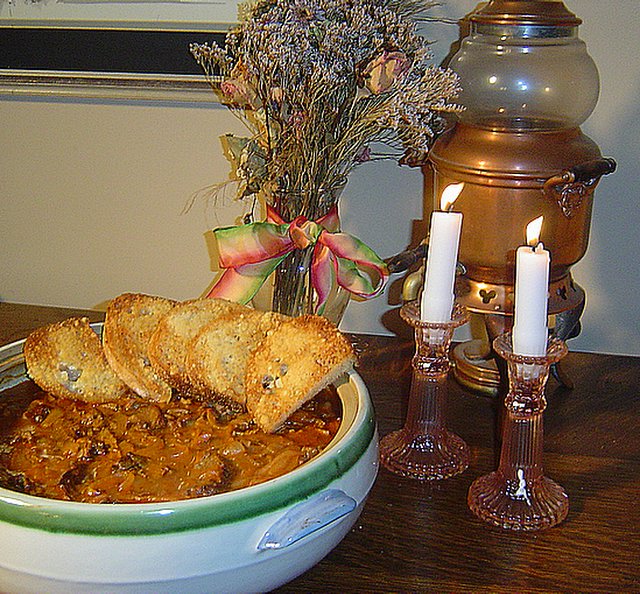
Mrs. Engelhard is an excellent cook. I have several recipes from her that I still use often. One is for “French Leftover Beef.” a recipe she got from a woman’s magazine years ago. It makes yesterday’s roast or steak worth saving, or as I sometimes do, cooking extra to make this dish. Recently I was left with some leftover roasted beef tenderloin (now that doesn’t happen often, does it?) and decided to make the dish for friends.

As I was getting ready to write about it for you, I was re-reading Elizabeth David’s “An Omelette and a Glass of Wine,” a collection of her newspaper and magazine writings. In it she mentions boeuf miroton, “the time-honored dish of every Frenchwoman who had to deal with…beef leftovers.” Of course I went looking for it in my French cookbooks and in the Larousse Gastronomique, the last word in French cuisine.

I came up with several variations of the recipe; this dish is indeed a version of boeuf miroton. Most of the French recipes call for putting beef slices on an oven-proof dish, covering with the sauce and baking, and none called for sugar, but everything else was present in one version or another. The French usually recommend this for leftovers of pot au feu (boiled beef), but I have used it successfully with roast, braised or even grilled beef.

All you really need to accompany the dish is a big green salad and cheese toasts. Butter slices of French bread, sprinkle generously with Parmesan cheese, dust with paprika, and run under the broiler to brown just before serving. I think your friends will enjoy it as much as mine did…and there won’t be any leftovers!

FRENCH LEFTOVER BEEF

2 onions, thinly sliced
2 tbsp vegetable oil
2 tbsp all purpose flour
1/2 cup dry vermouth (or other dry white wine)
1/2 cup beef stock
2 tbsp tomato paste
1 tsp sweet paprika
1-1/2 tbsp red wine vinegar
1-1/2 tbsp sugar
Salt and pepper to taste
3 cups cooked beef, in 1” chunks or thick strips

Sauté the onions in the oil until golden. Add the flour and stir until lightly browned. Add the remaining ingredients except beef and simmer, covered, for 20 minutes. Add the beef and simmer for 15 minutes more, adding a bit more beef stock if it gets too thick. Serve on a platter surrounded with cheese toasts. Serves 4-6.